The Bristol Sessions: Exploring Country Music's "Big Bang"
- April 13, 2026
Back before country music became a popular genre of commercialized music, it was commonly referred to as “hillbilly music”. This music originated in the Southern United States, was played on front porches and other communal areas, and was composed heavily of fiddles, banjos, and other string instruments. Though this type of music was enjoyed by many throughout the south, it didn’t gain widespread appeal until the Bristol Sessions of 1927. This event is widely regarded as the “Big Bang” of country music, and it led to not only the establishment of some of country music’s greatest hits, but to the establishment of the country music genre as a whole.
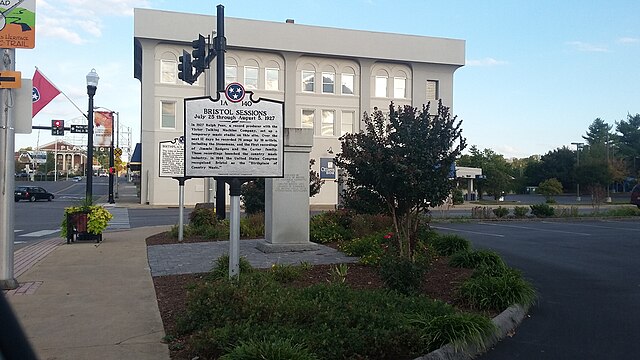
“Site of Bristol Sessions Recordings in Bristol, Tennessee where the Carter Family and Jimmie Rogers were recorded in 1927” by Swampyank is licensed under CC BY-SA 4.0.
Inspired by the success of some of the first commercial recordings from Companies like OKeh, Columbia, Brunswick and more, The Victor Talking machine company wanted to find new “hillbilly” talent to record and sell. To do so, they employed producer and former OKeh employee Ralph Peer to find their musicians. The city of Bristol was specifically chosen by Peer, as recording on the state line between Tennessee and Virginia allowed for many notable nearby artists to come and record. The recording sessions took place over the course of two weeks, from July 25 to August 5.
One of the reasons these sessions were so notable was because of the advanced technology used. Peer used a style of recording called the Westrex system, which involved using condenser microphones to record the music. One of the advantages of this system was increasing the range of the frequency that could typically be produced–60 to 6000 Hz as opposed to 100 to 2500 Hz. This gave the music drastically more range, which greatly strengthened the clarity and balance of the recordings. This technology was also highly portable–without this aspect, the sessions likely wouldn’t have been recorded in Bristol at all. In comparison, the popular method of acoustic phonograph recordings were not only bulky, but it generally produced low-quality sound. The upgrade in quality helped the music sell immensely. These sessions proved successful, and ended up producing great returns for the company.
Today, the Bristol sessions are generally agreed to be the single most notable event in the history of country music. It also kicked off the careers of some of the most popular country music performers in the world—like Jimmie Rodgers and the Carter Family. These sessions also established some important precedents for the music industry as a whole. The system of a one-time payment to artists with the promise of royalties later, the emphasis of vocals over instrumentals, and the exploration of religious themes in commercial music all originated with the Bristol sessions. These sessions were officially immortalized when the United States Congress officially designated Bristol as the Birthplace of Country Music.